


Imagine you (yes, you!) are a bee just like this one:

Your bee hive needs a new place to live. If you don’t find one within a few days the whole colony will perish.
Pressure, I know.
👋 Digging the content? Let’s talk Product☕. I’m available for Fractional Product Management, Workshops, Coaching, and Speaking.
You’re the lucky bee tasked with this prickly problem. Please bear with me, I promise to relate it all to Product Management in the end.
How would you approach this high-stakes situation?
What is the maximum number of days you would spend on exploration?
What kind of places should you inspect for viability?
How would assess the viability of every place you discover?
Easy questions for bees, much more difficult questions for us. Why are bees much better than us at finding the right location for their hive?
Bees Exploit Constraints To Optimize the Search Space
If we’re tasked with finding a new hive, we treat it as an Unconstrained Optimization Problem.
It’s a search problem without constraints: the search space is unbounded and there are near infinite options available.
In simple words, our unbounded search space is too large:
We see too many options that could be viable.
We don’t know what options are actually viable.
As smart as you are compared to any bee alive today, you’d probably still end up killing the whole colony. Because you don’t know any of the real-world constraints that matter for selecting a great home.
The reason bees are able to find a good hive for their colony is because they treat finding the right location as a Constrained Optimization Problem. The only way for bees to find a hive successfully is by considering the right number and right type of constraints.
If you use too few or the wrong constraints, then the whole colony may go extinct. Too many constraints, they’ll keep searching for too long, and the hive will die as well.
There are a gazillion ways for a hive location to be unsuitable and there are much fewer ways it can be satisfactory. Bees find the right hive for their colony by turning their exploration into a Constrained Optimization Problem with a bounded search space.
What Are Constrained Optimization Problems?
To paint a picture about the kind of constraints that apply for finding a viable bee hive (based on the research by Thomas Dyer Seeley and Roger A. Morse in the 70s):
Ideal cavity volume of around 40 liters (roughly 10 gallons).
Less than 10 liters is to be avoided as it won’t be possible store enough honey to survive the winter.
If it’s more than 100 liters, they won’t be able to keep it warm during the winter.
Entrance height of around 7 meters (21 feet). To keep safe from ground-dwelling predators.
Distance from the original hive should be at least 800 m (half a mile), so they don’t compete for exactly the same nectar and pollen.
By introducing the right number and type of constraints you can turn an Unconstrained Optimization Problem into a Constrained Optimization Problem.
Ok, enough talking about bees. Why does all of this talk about constraints matter for Product Development?
Great Products Need Constraints
Almost everybody in Product Management has seen the below Venn diagram before, which is what Marty Cagan calls the four big risks in Product
This Venn diagram matters, because it helps to turn an Unconstrained Search Problem with near infinite options into a Constrained Search Problem with a limited number of options.
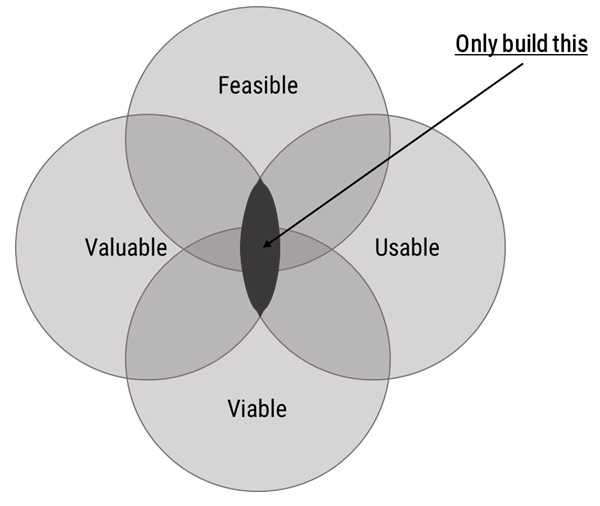
Why does this matter?
If your product has too many constraints, your search space will become too small and your product will suck - we call this Overconstrained.
If your product has too few constraints, your search space will become too large and there is a good chance your product will fail - this is called Underconstrained.
If you’re using the wrong constraints, you’re searching in the wrong search space and your product will likely hemorrhage money. This unfortunate situation is called Misconstrained.
Building great products is about intentionally and intelligently introducing the right constraints to limit the search space so you optimize your chances of building a great product.
In other words: there are near infinite ways for a product to suck and there are much fewer ways it can succeed.
Constraints Are Necessary For Great Products
Do you know the computer game Duke Nukem Forever? If you do, do you think it’s a great game? 99.99% of the population will answer no to at least one of these two questions.
Duke Nukem 3D, it’s predecessor, is considered one of the best games of all time. Duke Nukem Forever, if you take into account the 14 years it took to make it, is one of the worst games of all-time.
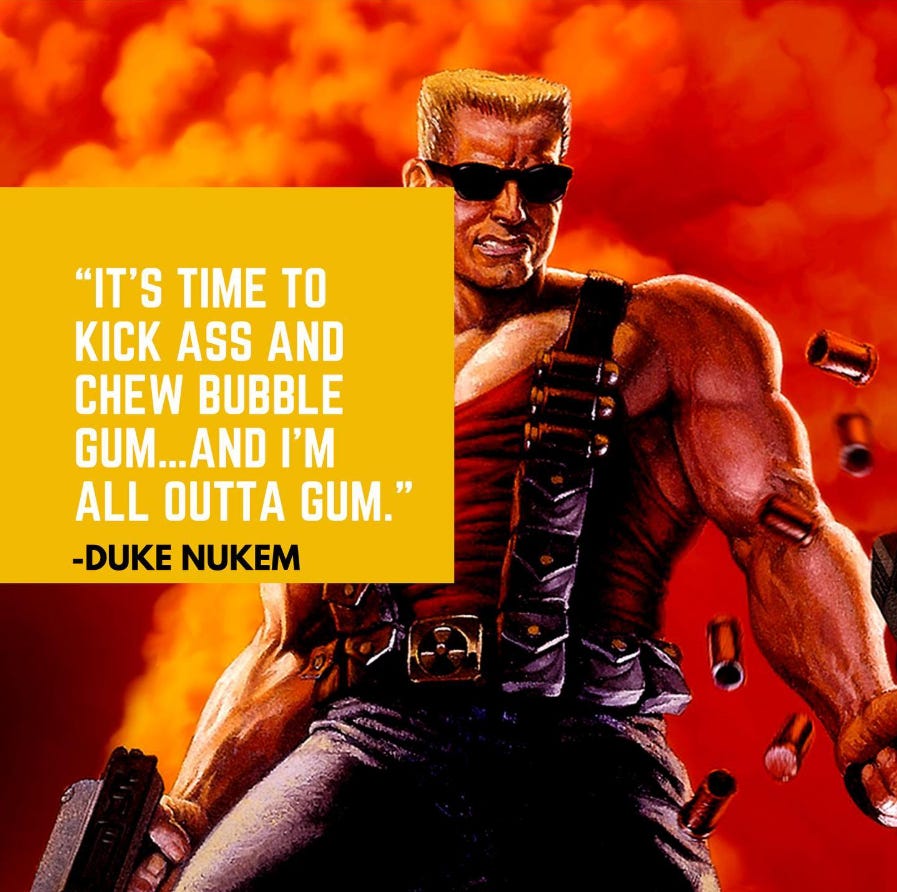
Duke Nukem Forever is the textbook example of a game developed with too few constraints. Duke Nukem 3D was so successful that game developer 3D Realms could splurge DukeNukem Forever’s development with money.
Duke Nukem Forever is what happens when you send a swarm of bees to look for a new hive location without any constraints. The end result is lousy and unforgettable. Plus it will take forever.
You need constraints to build a great game. If you can lazily solve every problem by throwing more money at it, you will get a lazy and lousy product.
You might be thinking now: every company comes with constraints, we don’t all have money to splurge like 3D Realms. It’s important to differentiate between internal involuntary constraints and voluntary (enabling) constraints.
You don’t pick internal involuntary constraints, like the company working in silos, or the CEO demanding teams to develop a large feature that will take more than 6 months. You deal with these kind of constraints in the best way possible.
Sometimes your internal organization may already introduce involuntary constraints that may making developing a great product nearly impossible. Constraints are one of the primary reason why big companies struggle to innovate. Big companies usually come with so many baked-in internal constraints (hierarchy, layers, silos, approvals) that your search pace is already barren and boring before you even start.
Let’s say you’re one of the lucky ones and you have a manageable number of constraints at your big company, then you still have to impose the right constraints to limit the search space of your product.
Okay, let’s make this less abstract and more concrete by talking about some real world examples of why constraints help with building great products or doing great work.
I want to stress, it’s super easy to find hundreds of examples across all kinds of industries, because that’s how crucial constraints are for driving innovation.
I stumbled on most of these examples while reading books, doom-scrolling Reddit and YouTube.
The Right Constraints Driving Innovation
Food & Beverages
Nutella
Invented during the World War II by an Italian pastry maker because of the cacao shortage.
Fanta soft drink
Invented in Nazi Germany by Coca Cola from cheap ingredients and leftover craps (fruit pulp) to keep the plant alive despite Allied trade embargos.
Popcorn
Popularized during the great depression as THE movie snack as it was super cheap yet still could offer an astronomical mark-up for movie theaters.
Doritos
At Disneyland they threw away a lot of stale tortillas every day. Someone decided to cut these tortillas and fry them, so they had less waste t and could make more money.
Software
Quake
Computers did not have the processing power for real-time, fast-paced 3D environments like Quake. John Carmack invented Binary Space Partitioning (BSP), to only render what the player is able to see.
King’s Quest / Space Quest / Police Quest / Larry
Floppy disks could store very little data, yet these point-and-click games required players to walk around in fancy graphical worlds. To circumvent the storage constraint, all drawings were made using vector graphics.
Hardware
ASML EUV lithography
Everybody thought the technology was so ridiculously complex that nobody would be able to pull it off. Now that complexity is their moat.
Nespresso
Swiss aerospace engineer Eric Favre was annoyed by his Italian wife who kept complaining she could not find good espresso anywhere in Switzerland. He vowed to make a machine that was so simple that even the Swiss could make good espresso.
Ipod
Thousand songs in your pocket.
Iphone
Must use your fingers as a stylus and not allowed to have a physical keyboard.
Palm Pilot
Had to fit in the pocket of a dress shirt.
Lisa Mouse
Cost less than 15 dollar to manufacture
Must track smoothly on a Formica desk or a pair of blue jeans
Entertainment
El Mariachi
Sundance winning movie made with a budget of 7000 dollars. The script was written around the location that was available and every shot was only a single take. Through clever editing Robert Rodriguez worked around any mistakes that inevitably were present in the single takes, which actually made the movie look incredibly fresh and unique.
The Pitt
Everything takes place at a single location (hospital). No logistics, permits, scheduling conflicts. This allows for 15 episode seasons that can be delivered once per year, which is insanely fast compared to other high-quality TV series that frequently delay seasons for many years, like Game of Thrones.
Four Finger Cartoon Hands
Almost all cartoon characters have four fingers, because five fingers were too expensive to animate, look bad on old movie projectors, and put you at risk for entering the uncanny valley where all the characters looked like aliens with spaghetti hands.
Jaws
The mechanical shark Bruce did not work after production of the movie had already started. Steven Spielberg rewrote the whole movie based on the viewers not being able to see the shark. John Williams hard carried the movie with the two-note leitmotif that indicated the shark was coming. This movie was the first summer blockbuster ever and if the shark hadn’t broken down, the movie would never have been as successful.
Star Wars IV: A New Hope
There was no budget to build space ships with custom plastic molds. George Lucas set a hard constraint to only buy off the shelf plastic model kits of tanks, ships and air planes which they refurbished and reused to build all the iconic space ships. This is why Star Wars looks so grimy and the rebels look like they scraped everything together, because they literally did.
Writing
The Diving Bell and the Butterfly.
Written by Jean-Dominique Bauby by only using the blink of an eye.
Green Eggs and Ham.
One of the most popular works from Dr. Seuss (Author of The Grinch) where he allowed himself to only use 50 distinct words.
Too Many, Too Few or Wrong Constraints Killing Innovation
The Metaverse
$80 Billion spent to achieve absolutely nothing
Boeing 747 Max MCAS Disaster
Don’t make any changes that will require pilot retraining while adding massive new engines that change completely how the plane flies in the sky. Boeing added an automatic system to prevent the plane from crashing, but didn’t adequately tell pilots about how it worked because then they would have not wanted to fly the plan. Boeing nearly went bankrupt because of this whole ordeal.
Game of Thrones - The Winds of Winter
George R.R. Martin is 77 years old, loaded with money, and has been working on the book for almost 15 years. If he was starving, I bet it would be finished within a month.
Vasa - Swedish Warship
Everything is better with MOAR CANNONS! Until your ship sinks.
The DBA Act - The Netherlands
To prevent false-employment and ensure a fair working relationship (e.g. to prevent people working as freelancers without health benefits while they should be employees), the Netherlands rolled out the DBA act. Now, the Dutch government doesn’t want to hire freelancers anymore, even if they cost 500 euros per hour, because they are scared of being fined. As a result the whole Dutch freelance market has collapsed.
Building Great Products - Wide First, Narrow Later
The moment throwing more money at a problem becomes the default and lazy solution, then you can forget about driving any disruptive innovation.
Robert Rodriguez, who won the Sundance movie festival with the cheapest movie ever, expressed it in the best way:
“Lack of money and resources leads to creativity. When films have a high budget, they try to solve every problem with money.” - Robert Rodriguez
Movie director Michael Bay is the opposite of Robert Rodriguez, he makes movie with extremely high budgets and solves everything with money.
Everything is loud: explosions, CGI, car chases and property destruction. Michael Bay frequently makes popcorn movies where spectacle is more important than plot, pacing or logic. The movie Armageddon is an excellent example where they crazily enough sent oil drillers to become astronauts instead of training astronauts to become oil drillers.
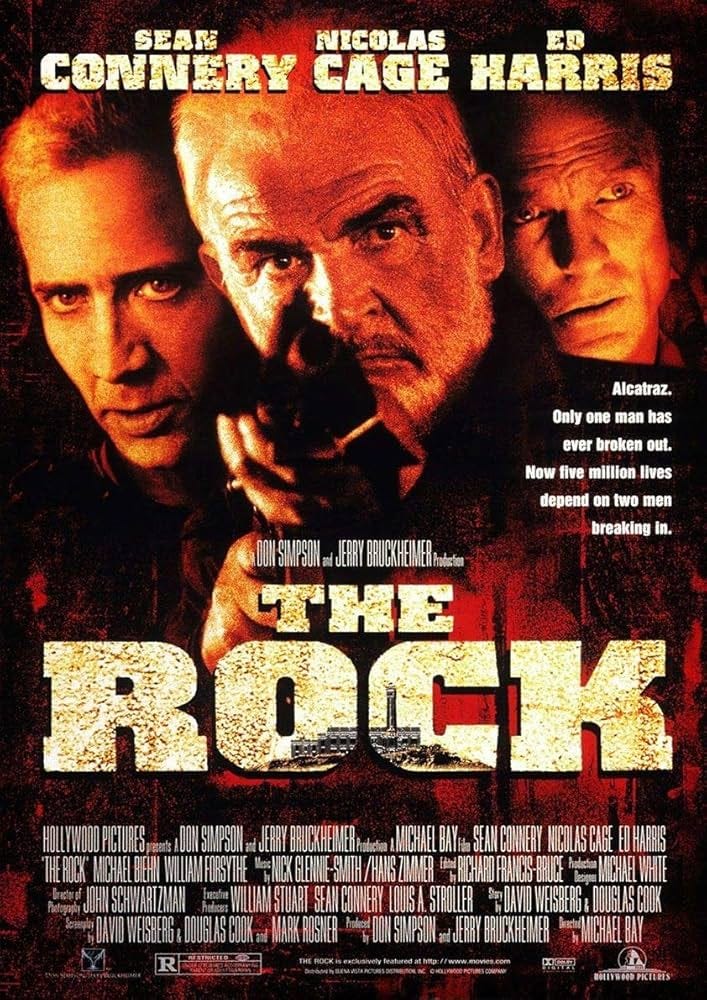
I want to stress, Michael Bay made some great movies. He also directed the movie the Rock, which is one of my favorite action movies. This movie has much more restraint, creativity, and a legendary score by Hans Zimmer. The first Transformers was also pretty good (I skipped all the other ones).
As humans, we need the right type and number of constraints do our best work. It’s part of our job to find and apply the right number and type of constraints. If we don’t do the hard part of forcing intentional constraints, then we will be frequently be cursed by constraints.
Building great products requires exploration. This is what we call discovery. You should go wide first, to discover the constraints that matter for what you’re trying to achieve.
We shouldn’t prevent constraints, we should work hard to have the right number and type of constraints. Only then can we be blessed with our constraints.
The reason why Robert Rodriguez was able to film a Sundance winning movie for $ 7000 dollars, because he treated all his constraints as creative obstacles to be overcome. Here are some examples from his playbook:
Don’t have money to write a script? He checked into a drug testing lab where he was paid money to participate in a drug trial. He had to stay here for one month.
Don’t have a script? Write it in one month when you’re staying at the clinic for the drug trial.
Don’t have actors? Ask some of your fellow patients to participate in your movie. The lead actor of El Mariachi was someone he met in the drug testing facility.
Don’t have money for a movie set or to travel anywhere? Write your whole script around a location you know and can easily reach.
Once you believe you’ve got the right set of constraints, then you should go narrow and leverage those constraints to build the right product.
Product Management is hard, because there are a gazillion ways to fail and there are very few ways you can succeed.
As Product Managers, we should think more like bees:
How can we turn this Unconstrained Search Problem into a Constrained Search Problem?
What are the right (enabling) constraints for what we’re trying to achieve?
If we don’t think carefully about our constraints, there is a good chance they will end up working against us. And we’ll settle for the default choice of working harder or throwing more money at the problem.
The choice is simple: do you want to be cursed by your constraints, or do you want to be blessed with constraints?
In part II, we will explore together why companies frequently unintentionally screw up their constraints and what we must do to prevent it from happening.